
Nov. 20 is National Substitute Educators Day.
In D38, we are always looking for enthusiastic individuals who want to serve as substitute teachers, and share their time and knowledge to help elevate our students.
Besides bringing an enthusiastic, caring approach to our classrooms, D38 substitute teachers must hold an active substitute authorization or an active Colorado teaching license. (These are not required of substitute support staff.) You can find out more about these positions on our website, and we invite those with the needed credentials to consider applying online at D38 Employment
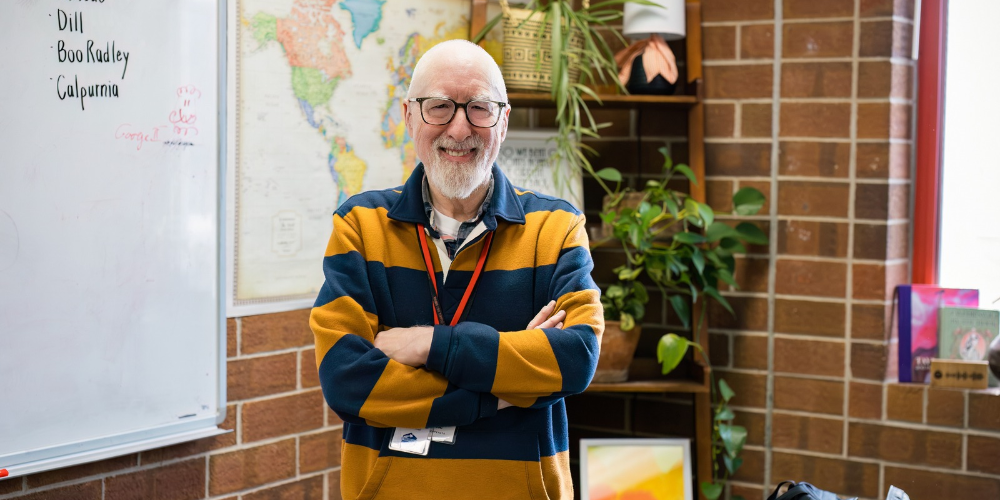
To celebrate these vital members of the D38 community, we are highlighting a substitute educator who was recommended by multiple school leaders in the District. He has a unique perspective on the role of a substitute, thanks to a more than 40-year career in education. While this featured substitute teacher brings a wealth of experience to the table, we welcome educators who are new to the substitute role too.
Peter Wise's first job was as a teaching assistant for San Diego City Schools in California. What would follow would be a 40-plus year career in education, authoring several math books, receiving a number of awards, and even coaching a national championship elementary chess team.
Wise says he began teaching informally as a teenager. After college, he moved to Los Angeles, where he earned a master's degree. He earned his teaching certification from the Los Angeles Unified School District and began teaching in the San Fernando Valley. He would eventually make the move to Monument where he became the math teacher at Prairie Winds Elementary.
While at Prairie Winds, Wise began to supplement the curriculum with hand-drawn materials that would later morph into his self-published series of math books. During this time, he also led teams of students to math competitions and taught local college classes at night.
Chess was a hobby from Wise's childhood, and it was something he would bring to D38 and teach many of our students to love as well. The year before he retired, he took a team of D38 students to the U.S. Elementary Nationals, and they placed fifth. The next year, they returned to the national competition and won first place.
After retiring from full-time teaching, it wasn't long before Wise returned to D38 as a substitute. He says he wanted to continue to be involved in educating students and leverage his experience in a meaningful way to another generation.
You can read more below about Peter Wise and his unique perspective on teaching, both as a full-time teacher and substitute.
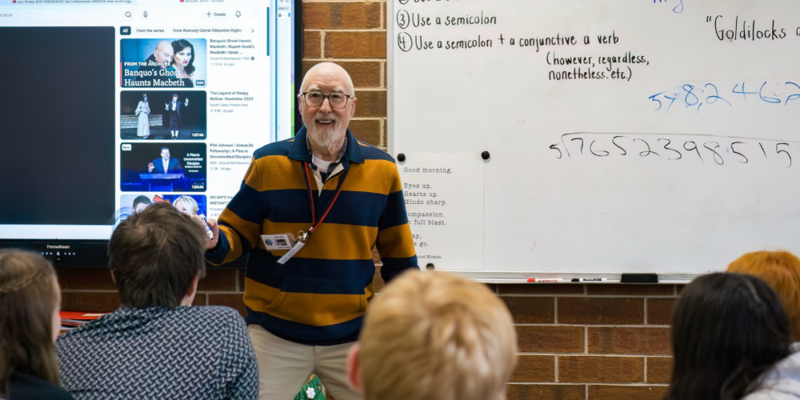
What inspired you to become an educator in the first place?
It felt like such a natural fit for me in every way! I loved and still love teaching! I can’t remember a time when I seriously thought about any other profession, starting with the chess club I ran in seventh grade.
What do you find most rewarding about being a teacher (full time or substitute) and working with children?
I find it exciting to see the light go on for students. I regard every student and every class as a challenge to see how much I can motivate and teach them. I love it when I hear a student say that they didn’t use to like a subject, but now really like it. Sparking interest in a student is something that really excites and motivates me. I miss the classroom and the students during summer breaks.
How has your perspective on education changed throughout your career?
I used to think that teaching was simply giving information out to students. Now I take a more well-rounded approach. I now see the importance of connecting with students relationally. I am an introvert and bookworm by nature, but I’ve learned how to ham it up in the classroom (and enjoy it). My children have helped me to “de-nerdify” my wardrobe, so at least I’m presentable in the classroom now.
As the years have gone by, I also learned the importance of motivation as a valid component of teaching. It’s almost like selling something. To do this, I explain why any particular subject is important and how it connects to jobs and our understanding of the world in general. In math classes, I would show short video segments of remarkable things that math students did and interesting videos of pi and the golden ratio, etc. There’s a little bit of “entertainer” in me that likes to make the class laugh. I interject humor into the classes, whenever I can. When teaching about graphing inequalities, I called the graph endpoints “dots” and “donuts,” and I would joke that we’d have a party that featured donut holes (dots/points) and donuts (hollow circles on the line). I developed a folksy way of teaching math across much of the middle school curriculum. (Some of my students came in before school to help field-test and critique the materials. I called it the “Breakfast Club” because I would bring breakfast treats to school.)
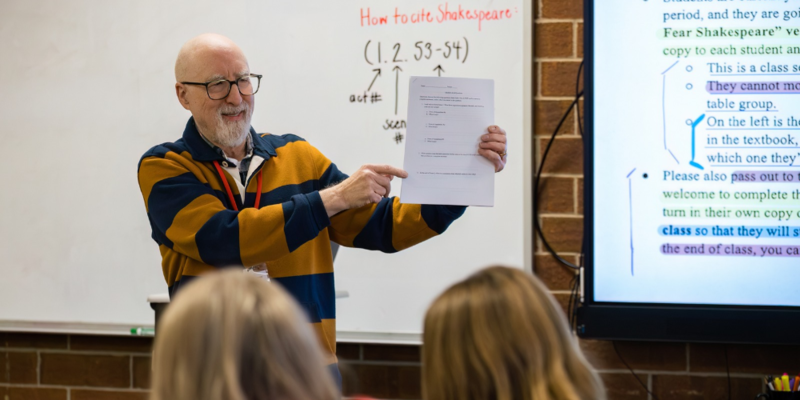
Do you approach substitute teaching any differently than you did when you were in the classroom every day?
As a sub I am quite similar personality-wise (no pun intended), but I don’t create the lesson plans, instead I follow them. But I still try to add insight to the material in a way that supplements rather than supplants the lesson plans.
Are there different challenges as a substitute or is it more difficult to step into a classroom as a substitute than an every day teacher?
If the lesson plans are straightforward, it’s easy. It’s more challenging if the plans are unclear. It’s easier if I return to the same classroom or see some of the same students because then a relationship has already been established and clear expectations on both sides give the class some structure.
Are there any qualities in a person or anything specific that you think makes a good teacher, whether it be a substitute or every day teacher?
Know what it’s like to be in the students’ shoes. Be able to put the cookies on the bottom shelf. Sequence instruction from where they are to where you want them to be. Be patient. Be a motivator. Be a reflective teacher. Ask yourself frequently things like, “How did this day go?”, “Where did I start to lose them?”, or “What could I have done to improve today’s lesson?” You don’t have to browbeat yourself (unless you really deserve it,) but you can reflect on the lessons of the day, constantly thinking of ways to improve.
I learned that many effective teachers develop a wealth of ideas and materials over time. A good filing system, whether on the computer or in file boxes is important. Keep on the lookout for video clips, articles, and activities, and have a way of collecting and retrieving them.
Find ways to “gamify” the subject—especially for review sessions.
Be passionate about the subject. Make the subject interesting. Vary activities. Know when you’re losing them.
You have authored a number of books. What was the driving force for writing these books?
I wanted to have materials that were kid-friendly and that explained things in a simple, non-clinical way. I developed tips and tricks, and even silly chants that became earworms. To write these books I worked backwards. I would look at the standard textbooks and think to myself, “Is there another way—a fun and memorable way—to teach this stuff?”
I used these in the classroom to front load the math concepts, but then moved on to the textbooks. Students got a double pass of the material. Another motivation for writing these books was to teach students to write their math answers line by line, instead of scribbling all over the page. To do this, I made answer boxes for each step of the math problems that students had to fill in before writing their final answer.
Most recently I wrote a workbook for older students who still struggle with times tables, but would be put off by a juvenile format. It was a lot of work, but I had fun, and my two children helped.
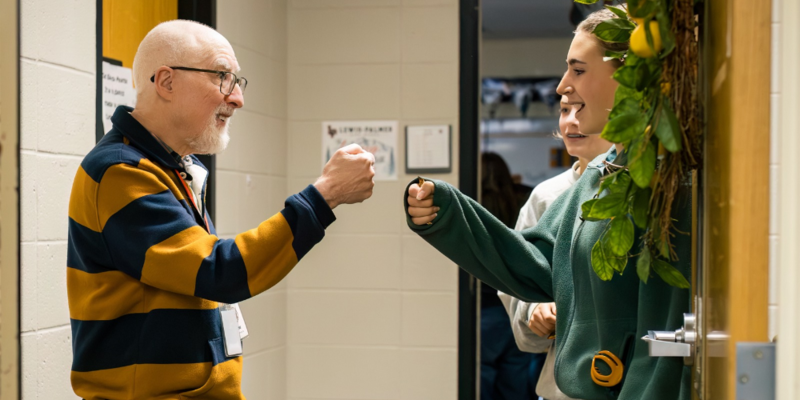
What are some of your interests outside of math and education, and how do you like to spend your free time?
I enjoy hiking, photography, drone photography, photo editing, and playing piano—and, of course, a lot of reading and class prep, even to this day.
Is there a message you would like to share or any advice you could offer to other educators, whether they be a substitute or every day teacher?
Aspire to inspire. Prioritize relationships. Help students to realize you have their best interests at heart and are really on their side. Be real, and be caring. Show them how whatever they’re learning connects to life.
Vary the modality of instruction frequently (about every 15 minutes is a good rule of thumb). When teaching, work from the simple to the complex. Find ways to make the material interactive and interesting. Make good use of PowerPoint/Keynote presentations to sequence the learning, and make it visual and fast paced.
Leverage the strong points of your personality and life experience to enhance instruction. Genuinely love what you’re teaching, and try to impart that love as you teach.